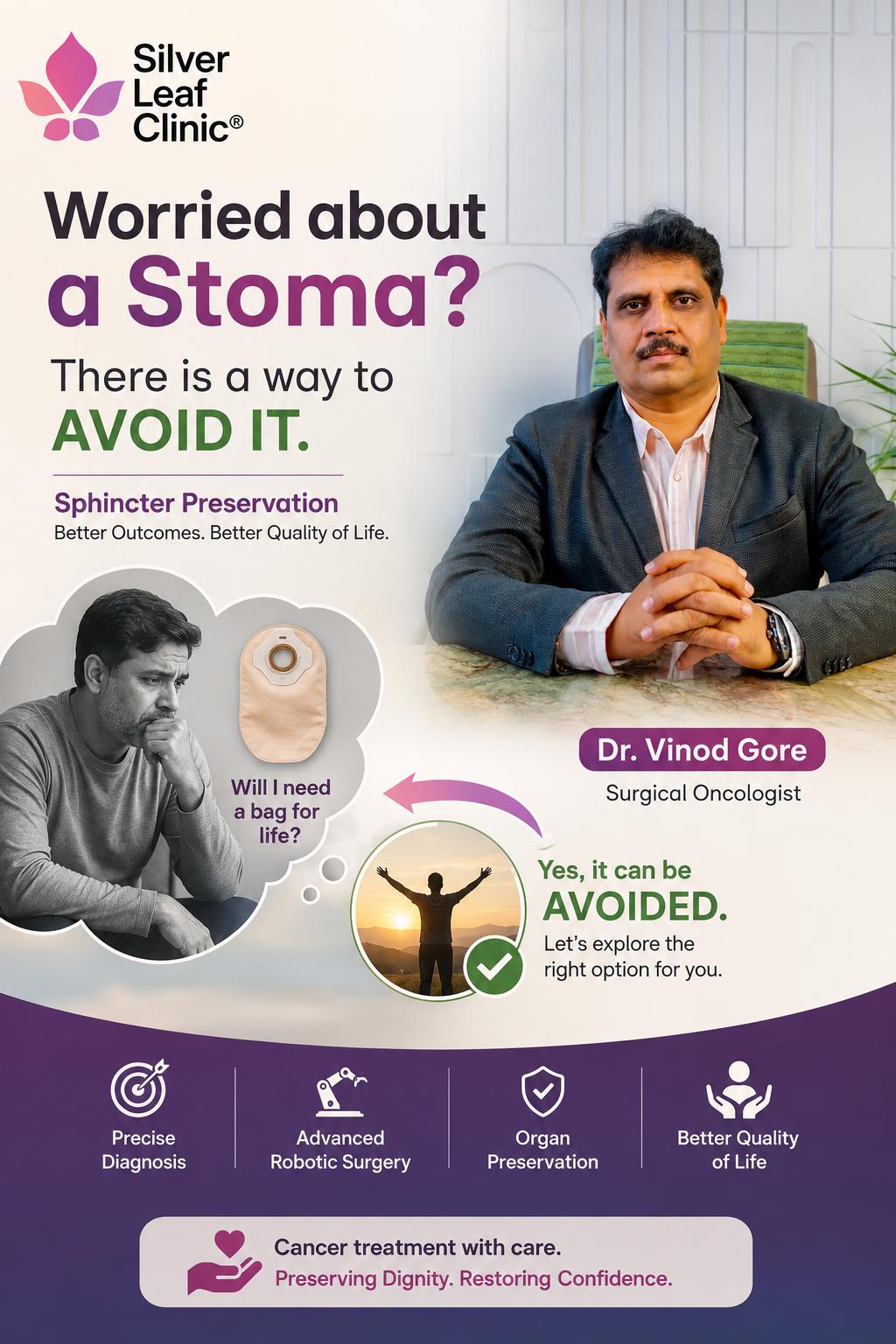
There is a small ring of muscle, no wider than a wedding band, that most of us will live our whole lives without once thinking of. It asks for nothing. And yet it guards something we call, without quite knowing why, our dignity.
The valve we never thank
Consider, for a moment, the quiet machinery of an ordinary morning. You wake, you rise, you go about the small business of being human — and somewhere in all of it, without a single conscious thought, your body holds and waits and chooses its own moment. We never pause to admire this. We notice the heart for its drama, the eyes for their beauty, the hands for their work. But the little muscle at the very end of the bowel — the one that lets us decide *when* — we never thank at all.
It is called the anal sphincter, and it is the body's most modest sentinel. A ring of muscle around the anal canal, the final gate of the bowel, it is what allows a person to hold and to release at will. This ability has a plain clinical name — continence — but it carries a meaning far larger than medicine. It is the difference between choosing and being chosen for. And like so many quiet blessings, we only truly see it when it stands in danger.
For most people who hear the words "rectal cancer," the first terror is not of the disease at all. It is of the bag — the permanent stoma, the pouch upon the belly, the fear of never again being wholly in command of one's own body. I have sat across from strong men and unshakeable women who received the diagnosis with composure, and then, in a smaller voice, asked the only question that truly frightened them: *Doctor, will I have to wear a bag forever?*
This is the story I want to tell you. It is a hopeful one. For modern surgery has quietly rewritten the ending — and today, in the great majority of patients, that small ring of muscle can be saved.
Two muscles, working in the dark
The sentinel is not one muscle but two, labouring together like an old married couple — one steady and silent, the other alert and willing. The internal sphincter is involuntary; it stays closed on its own, without instruction, keeping the canal sealed through all our waking and our sleeping. The external sphincter is the one you command — the muscle you squeeze, consciously, when the urge arrives at an inconvenient hour and you must hold on until you reach a door that closes. Around them both, the puborectalis muscle of the pelvic floor lends its quiet strength.
Watch how gracefully they work. When stool arrives in the rectum, the wall stretches and sends up its message — it is time. The internal muscle relaxes a little, to sample what has come; the external muscle and the pelvic floor hold firm, buying you the minutes you need. And when at last you are ready, in privacy, you let go — and the body completes what it began. This is a reflex of astonishing delicacy, and it rests upon two things that must both survive: healthy muscle, and healthy nerves.
Why I tell every patient this
A sphincter that is present but robbed of its nerves is like a lamp without oil — whole in form, dark in function. This is why sphincter preservation is never merely about keeping the muscle. It is equally about protecting the fine pelvic nerves that govern the sphincter, the bladder, and sexual life. Precise, nerve-sparing dissection is the whole art.
1
The Threat
What puts the sphincter at risk
Two enemies, and only two, threaten this quiet guardian during cancer surgery — and to understand them is to understand how we defend it.
The first is the reach of the tumour itself. To cure rectal cancer, the surgeon must remove it with a clear margin of healthy tissue all around and, crucially, below it. If the tumour has grown down to the sphincter, or into its muscle, there may simply be no safe ground left beneath it. To keep the sphincter then would be to leave cancer behind — and that we cannot do. Cure must always come first. This is the one law that never bends.
The second enemy is subtler — injury to the nerves. The fine autonomic nerves run alongside the rectum like threads of silk, governing the sphincter, the bladder, and sexual function. A careless hand can tear them, leaving the muscle whole but powerless. This is why the operation we call Total Mesorectal Excision must be performed with the patience of a jeweller, sparing every nerve it can.
Two other things weigh in the balance. How low the tumour sits — for the closer it lies to the anal verge, the harder preservation becomes. And the strength the sphincter already has — for if age or old injury have left it weak, saving it may give a person little worth keeping. Honesty about all four is the beginning of wisdom.
2
The Decision
When we preserve, and when we must let go
Every decision in this surgery is a weighing — never one factor alone, but all of them held together in the palm of judgement. The scale tips toward preserving the sphincter when there is enough distance from the anal verge to win a safe margin; when the tumour has not invaded the sphincter muscle; when a clear margin can be found below and around it; when the tumour has shrunk kindly after chemoradiotherapy; when the sphincter's resting tone and squeeze are still good; and when the patient is fit, willing, and ready for the road of recovery.
It tips the other way — toward removing it, and accepting a permanent stoma — only when the tumour sits at or below the sphincter with no margin to be had; when it invades the muscle directly; when no clear margin is possible without leaving cancer; when the tumour has not yielded to treatment; or when the sphincter is already too weak to serve.
Cure is never traded for the sphincter. But with modern treatment, a safe margin can often be created where once there seemed to be none — and so far fewer people need a permanent bag than in the years gone by.
3
The Assessment
How we learn whether it can be saved
No single test pronounces the verdict. We gather the evidence as a careful judge gathers testimony — and only then decide.
There is the examining finger — the digital rectal examination, that humble, irreplaceable act in which the surgeon learns how low the tumour lies, whether it is mobile or fixed, how near it comes to the sphincter, and how strong the muscle's grip remains. No machine has yet replaced this hand. There is the question of baseline control — for we ask, plainly, how well you already hold stool and wind, and where needed we measure the sphincter's pressures objectively. There is the high-resolution pelvic MRI, the great map of the campaign, showing the tumour's exact height, its distance from the sphincter, its threat to the margins, the state of the nodes — and repeated after treatment to see how the ground has changed. There is the colonoscopy that confirms the diagnosis and guards against other tumours hidden higher up. And there is the tumour board, where surgeon and oncologists and radiologist sit together and agree the plan — including whether treatment should come first, to make the saving possible.
4
The Craft
The ways we save the sphincter
Sphincter preservation is not a single operation but a strategy — most often a patient sequence of shrinking the enemy first, then removing it with a precise and gentle hand.
First, to shrink. For low or locally advanced tumours, radiotherapy — usually joined with chemotherapy — is given before surgery. It shrinks the tumour and can draw it back from the sphincter, conjuring a safe margin where none had seemed to exist, turning an impossible case into a hopeful one. In selected patients, all the treatment is given first, for even kinder downstaging.
Then, to remove — the heart of it all. Total Mesorectal Excision removes the rectum within its fatty envelope along precise, God-given planes, sparing the pelvic nerves. Done well — and often done robotically, for the deep pelvis rewards precision — it gives at once the best cure and the best function.
From here the road forks gently. In a Low Anterior Resection, the rectum bearing the tumour is removed and the colon rejoined to what remains of the rectum or anal canal — keeping the sphincter and the natural path — used when enough healthy canal survives below the tumour. In an Intersphincteric Resection, for tumours sitting very low, the surgeon removes the internal sphincter alone, with the tumour, while sparing the external sphincter, then joins the colon to the anal canal itself — saving natural control in cases that once knew no answer but the permanent bag. It demands a meticulous hand and a careful choice of patient.
The temporary stoma — a bridge, not a destination
After a low join, we usually fashion a temporary loop ileostomy — a small diversion that lets the new join heal in peace, far from the traffic of the bowel, greatly lowering the danger of a leak. It is planned from the very start for reversal, usually after eight to twelve weeks (later, if chemotherapy is needed). I say this slowly to every patient, because it is so often misheard: the stoma is temporary. The sphincter is saved.
5
The Recovery
Teaching the muscle to live again
To save the sphincter is only to open the door. To help it work well again is the patient labour of the months that follow — and here, more than anywhere, the patient and the surgeon walk together.
There are the pelvic floor exercises — simple, daily, quietly powerful — which strengthen the sphincter and the muscles around it, and which, guided by a physiotherapist, are among the most effective things a person can do for their own recovery. There is the matter of LARS — Low Anterior Resection Syndrome — the frequency, urgency and clustering of motions that often follow a low join, and which, I promise my patients, usually softens and settles over one to two years as the bowel learns its new shape. Diet and routine, a food-and-symptom diary in the early months, medication where needed, bowel retraining — each plays its part.
When a covering ileostomy was made, it is reversed in good time, once the join has healed and any chemotherapy is done, confirmed first by scan or scope. And for the few whose control stays troublesome, there remain further kindnesses — transanal irrigation, biofeedback, nerve stimulation. You are reviewed, you are heard, and you are never left to manage alone.
A few words to carry home
If you have been told you may need a permanent stoma for rectal cancer, hear this gently: a specialist opinion is worth seeking, for modern techniques save the sphincter far more often than they once did. The cancer must be cured — that law does not bend — but within it there is now great room for mercy, and that mercy is real.
The little ring of muscle we never thank asks for nothing still. But when it stands in danger, it deserves every art we possess. To save it is to return to a person not just their health, but their quiet command over their own body — the freedom to choose their own moment, as they always have, as they always should. That, in the end, is what this surgery is for.
Ask whether your sphincter can be saved
If you have been told a permanent stoma may be necessary, a specialist second opinion is worthwhile. Dr. Gore will give you an honest assessment after examination and MRI. Please bring your MRI and CT scans, colonoscopy and biopsy reports, and any previous notes — ideally on CD or shared via WhatsApp in advance — to an in-person or video consultation at Silver Leaf Clinic, Hadapsar.
About the author: Dr. Vinod T. Gore is a Senior Surgical Oncologist with over 30 years of experience, specialising in sphincter-preserving and robotic rectal cancer surgery. He is Department Head of Surgical Oncology at Sahyadri Manipal Hospital and practises at Silver Leaf Clinic, Hadapsar, Pune.
Correspondence: Silver Leaf Clinic, 511 City Centre, Solapur Road, Opp. Vaibhav Theatre, Hadapsar, Pune 411028 · ☎ 88558 10010
This article is general information and literary in nature, not personal medical advice. Whether the sphincter can be preserved is an individual decision based on examination, MRI and tumour response, always made with cure as the first priority. Please bring all scans and reports to your consultation.